

It is 100 years since Paul Otlet and Henri La Fontaine created the ‘Mundaneum’ – the prophetic conceptual precursor of today’s Internet.
The utopian Mundaneum (renamed from the Palais Mondial in 1924) was essentially a ‘Google by telegram’.
It has been described by Le Monde as ‘A paper Google’, by the New York Times as ‘The web time forgot’ and by Nature as “A repository of all knowledge”.
It was not only a giant networked bibliography, but also a visual synthesis of all that was known. Atlas’s of knowledge were created from books (a geological example is shown below).
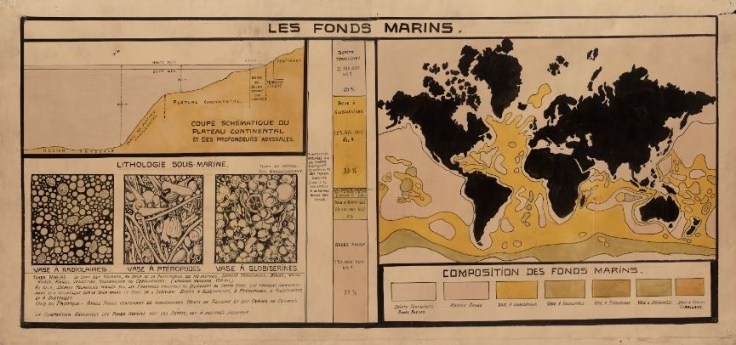
Otlet saw books only as containers, separate to the chunks of information and insights they contained, that could be extracted and linked together. This was a radical idea at the time hinting at the future hyperlink and Natural Language Processing (NLP).
In the late 19th century the industrialisation of printing combined with cheap binding materials caused an explosion in information volumes leading scholars to refocus on classification schemes. A founder of the information science discipline, Otlet’s bold visual thinking on the collection, organisation, accessibility and dissemination of knowledge for the benefit of society remains the goal of all information scientists today.
La Fontaine was awarded the Nobel Peace prize in 1913 and ironically most of the Mundaneum was destroyed by book burning Nazi’s in 1940.
Today’s technology focused, decentralised, largely profit driven ‘almost anything-goes’ Internet and social media are quite different from Otlean and subsequently H.G. Wells ‘World Brain’ vision ‘of the Internet’. Their vision took a systems approach, beyond mere information retrieval, with more curation, attribution and verification of published information with supporting political, financial and internationalist organisational structures.
Otlet, La Fontaine and Wells were idealistic visionaries, driven by a humanist view that access to interlinked knowledge for all was a path towards enlightenment for humanity, world peace and social justice.
The dangers of an overarching centralised universal truth for society was popularised by Orwellian dystopian essays such as 1984.
Arguably Wikipedia, despite its limitations, is closest to some of the ideals of Otlet and Wells. As are published academic literature networks allowing information discovery possibilities that were virtually impossible just 20 years ago.
In 2024 Artificial Intelligence (AI) technologies such as ChatGPT and Generative AI are poised to open a new chapter, transforming our interaction with the Internet. In today’s Information Age, information science principles are arguably more important than ever to ensure trust in information. For example see my previous post on the ‘3 Laws’.
An Ipsos survey was conducted in November 2022 of over 14,000 Internet users in 20 countries. It showed a decrease in trust of the Internet (private sector Internet companies) by 11% since 2019. Less than half of people in the US, UK and France felt the Internet is effectively governed. According to Dr Christian Kastrop “The survey clearly shows distrust in the largest communication and information network humankind has ever created”. The majority of survey participants called for new government policies especially around personal privacy, data and cybersecurity.
In 2022 a UK OFCOM study found 6% of users believe everything they see on the Internet. Around 30% of adults that go online do not even consider the truthfulness of information. The survey also found around 25% of people claiming to be confident in spotting misinformation were unable to identify fake social media posts.
The Internet as a governed ‘walled garden’ of information may neither be feasible nor desirable. The path to a ‘better Internet’ may ultimately lie with a systems approach including technology, policy and education. Specifically, raising levels of digital literacy ‘the questioning habit of the mind’ in a world of increasing misinformation.
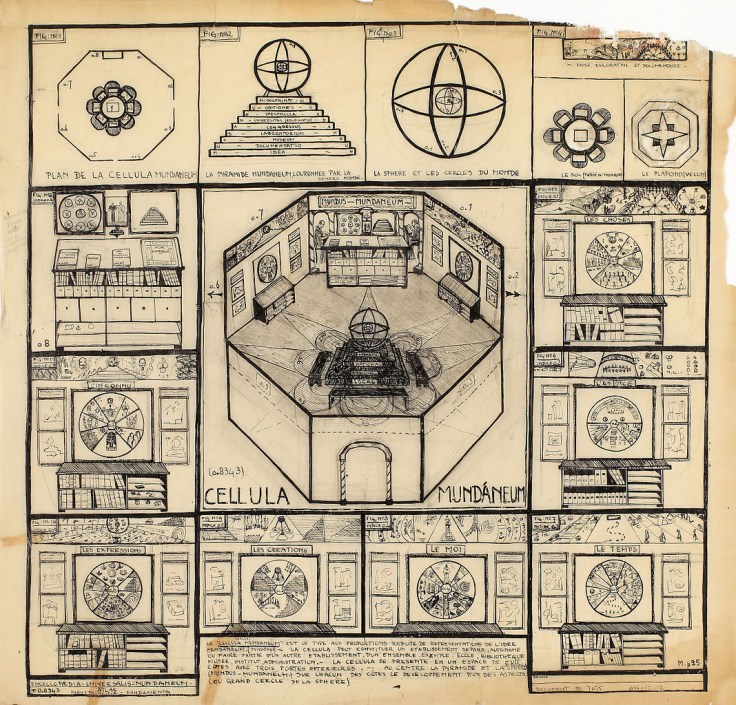

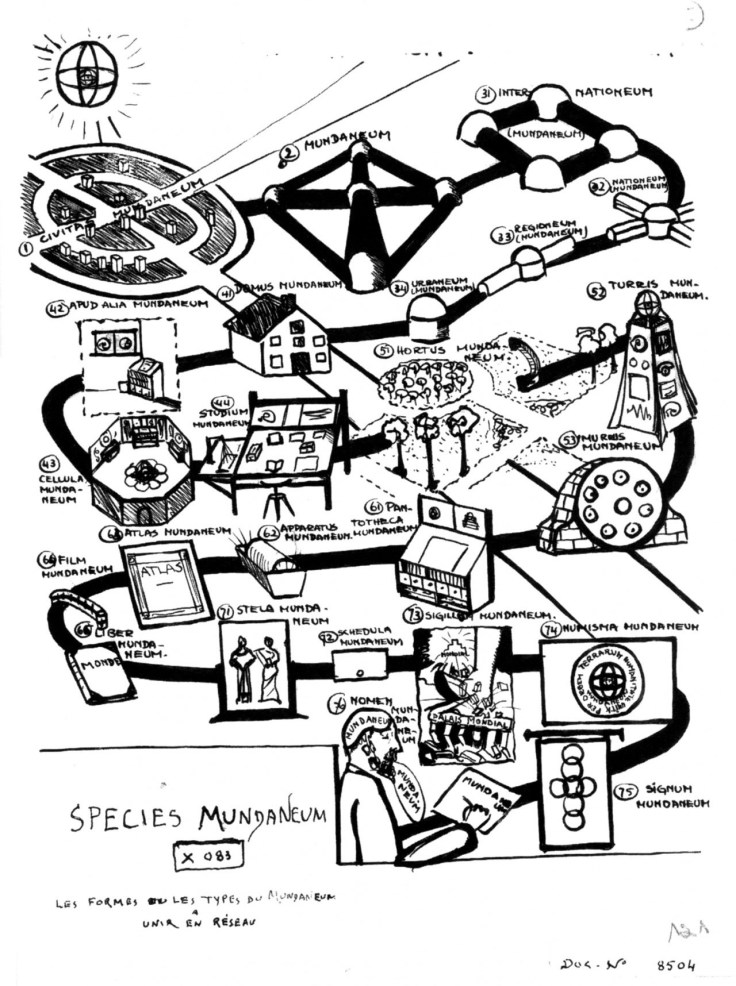
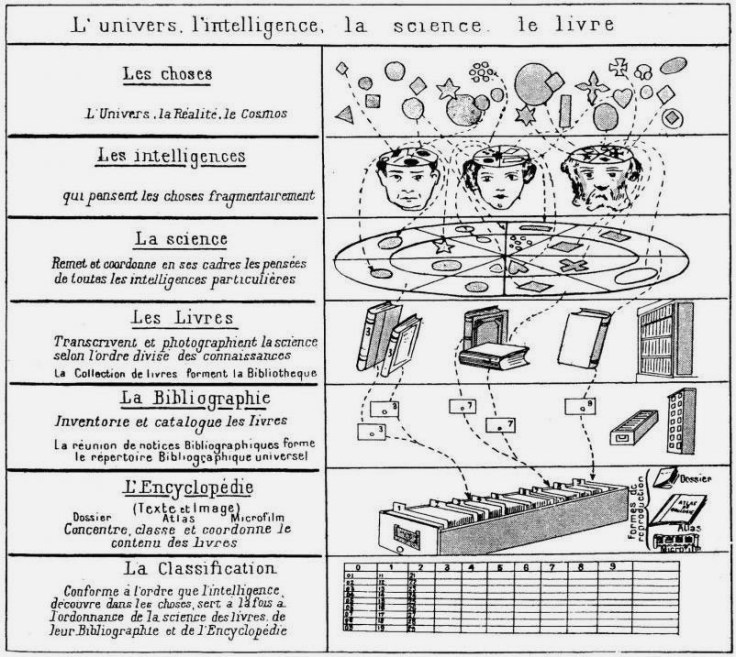
References:
https://www.cornellpress.cornell.edu/lost-horizons-imagining-internet-informatica-alex-wright-07-31-2023/
https://escholarship.org/content/qt5pq3v1cp/qt5pq3v1cp_noSplash_e1e31d7dcfcf50b79e85de245aa55fee.pdf?t=n7q3u4
 A Geodyssey - Geoscience Text Analytics and Enterprise Search Research
Leave a comment