Mapping and understanding Earth: Open access to digital geoscience data and knowledge supports societal needs and UN sustainable development goals.

Excellent paper published this month by Hinsby et al (2024) abstract below:Open access to harmonised digital data describing Earth’s surface and subsurface holds immense value for society. This paper highlights the significance of open access to digital geoscience data ranging from the shallow topsoil or seabed to depths of 5 km.Such data play a pivotal role... Continue Reading →

AI and Censorship

Issues can arise when chatbots intended for an international audience are based on current Chinese Large Language Models (LLM) which are state censored. These models include traits identified in testing such as refusing to answer certain questions, deflection by broadening a question, omission, and propaganda. These models, such as potentially Alibaba's "Qwen" are available in... Continue Reading →

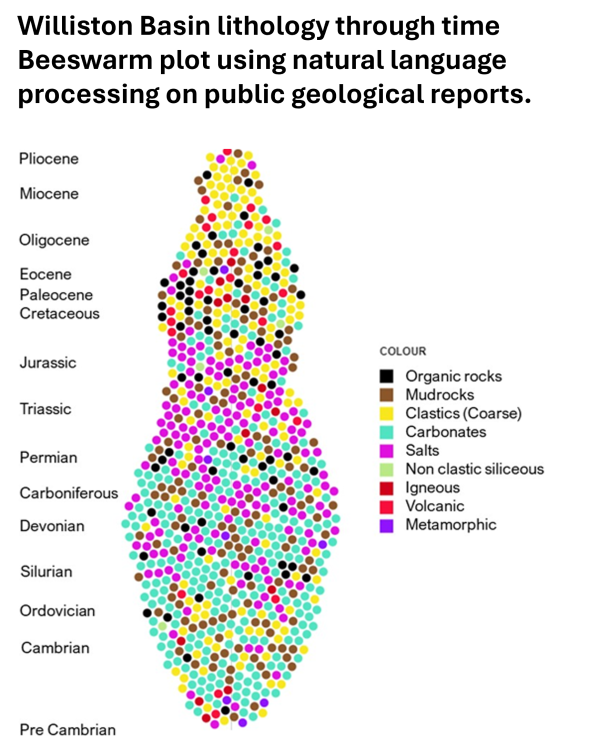
Natural Language Processing (NLP) to support Geological Modelling and Mapping

At the University of Exeter Institute for Data Science and Artificial Intelligence (part of Turing Institute) at the AI for Geological Modelling and Mapping conference today. Great conference, discusions, excellent presentations from: Kristine Asch, BGR, Germany – Geology without frontiers: The pioneer project of the first digital International Geological Map of Europe (IGME 5000)Charlie Kirkwood,... Continue Reading →

Paper published: Identifying and comparing information cultures: a perspective from research institutes and academic libraries

Delighted to co-author this published paper with my Brazilian colleagues. Identifying and comparing information cultures: a perspective from research institutes and academic librariesThis article aims to identify the information culture of two research institutes and an academic library, to verify the alignment of this culture with the organizational strategy. The methodological approach adopted follows the... Continue Reading →

International Science Council (ISC) – Artificial Intelligence

The International Science Council (ISC) recently published a guide for policy makers: Evaluating rapidly developing technologies including AI, large language models and beyond. This builds on high level principles already published from UNESCO, OECD, EU and UN etc.According to Peter Gluckman, ISC President, “In an era marked by rapid technological innovation and complex global challenges,... Continue Reading →

Project Innerspace GeoMap: for Geothermal

Project Innerspace GeoMap: Global Geothermal Resources Map. For those that are not aware, some exciting global data freely available to support geothermal exploration & development.According to Project Innerspace:"We aim to unlock global exponential growth of geothermal by facilitating the rapid transfer of resources, technologies, and know-how from the oil and gas industry toward geothermal energy... Continue Reading →

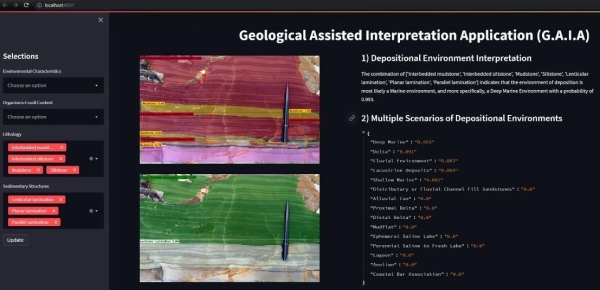
Capturing interpretational uncertainty of depositional environments with Artificial Intelligence

Excellent PhD thesis online from Athanasios Nathanail at Heriot-Watt University. Quite thought provoking for future possibilities using Machine Vision, Natural Language Processing and Neural Networks. Abstract Geological interpretations are always linked with interpretational and conceptual uncertainty, which is difficult to elicit and quantify, often creating unquantified risks for understanding the subsurface. The complexity and variability... Continue Reading →

Artificial Intelligence for Geological Modelling and Mapping Conference University of Exeter May 2024

Delighted my paper was accepted to the “Artificial Intelligence for Geological Modelling and Mapping” conference at the University of Exeter, May 22-23, 2024. The conference is organised by the Institute for Data Science and Artificial Intelligence (IDSAI). The title of my paper is “How can Natural Language Processing (NLP) support Geological Modelling and Mapping?”. #geology #geosciences #subsurface #artificialintelligence #naturallanguageprocessing #earthscience

Website Powered by WordPress.com.

Up ↑