Project Innerspace GeoMap: Global Geothermal Resources Map. For those that are not aware, some exciting global data freely available to support geothermal exploration & development.According to Project Innerspace:"We aim to unlock global exponential growth of geothermal by facilitating the rapid transfer of resources, technologies, and know-how from the oil and gas industry toward geothermal energy... Continue Reading →
Video of Geological Society Talk on Artificial Inteligence now on YouTube
The talk I gave on applying artificial intelligence to geoscience documentation at the Geological Society of London last year is now on YouTube. I have added the link in the comments, it is from the 'Digital Geoscience' conference held in Burlington House on the 13th November 2023.It covers how we may use such techniques to... Continue Reading →
Capturing interpretational uncertainty of depositional environments with Artificial Intelligence
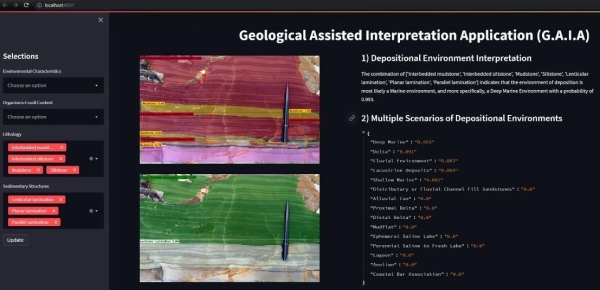
Excellent PhD thesis online from Athanasios Nathanail at Heriot-Watt University. Quite thought provoking for future possibilities using Machine Vision, Natural Language Processing and Neural Networks. Abstract Geological interpretations are always linked with interpretational and conceptual uncertainty, which is difficult to elicit and quantify, often creating unquantified risks for understanding the subsurface. The complexity and variability... Continue Reading →
Artificial Intelligence for Geological Modelling and Mapping Conference University of Exeter May 2024
Delighted my paper was accepted to the “Artificial Intelligence for Geological Modelling and Mapping” conference at the University of Exeter, May 22-23, 2024. The conference is organised by the Institute for Data Science and Artificial Intelligence (IDSAI). The title of my paper is “How can Natural Language Processing (NLP) support Geological Modelling and Mapping?”. #geology #geosciences #subsurface #artificialintelligence #naturallanguageprocessing #earthscience
Are we building ethical AI Chatbots in our Scientific and Industry Sectors?
Are we building ethical AI chatbots in our scientific disciplines and industry sectors? There are many aspects to ethical AI for domain chatbot apps powered by Large Language Models (LLM). From a human centric perspective these include (1) privacy and data protection, (2) equality and non-discrimination and (3) transparency and explainability. From a content and... Continue Reading →
Rocks, Birds, Water and Space
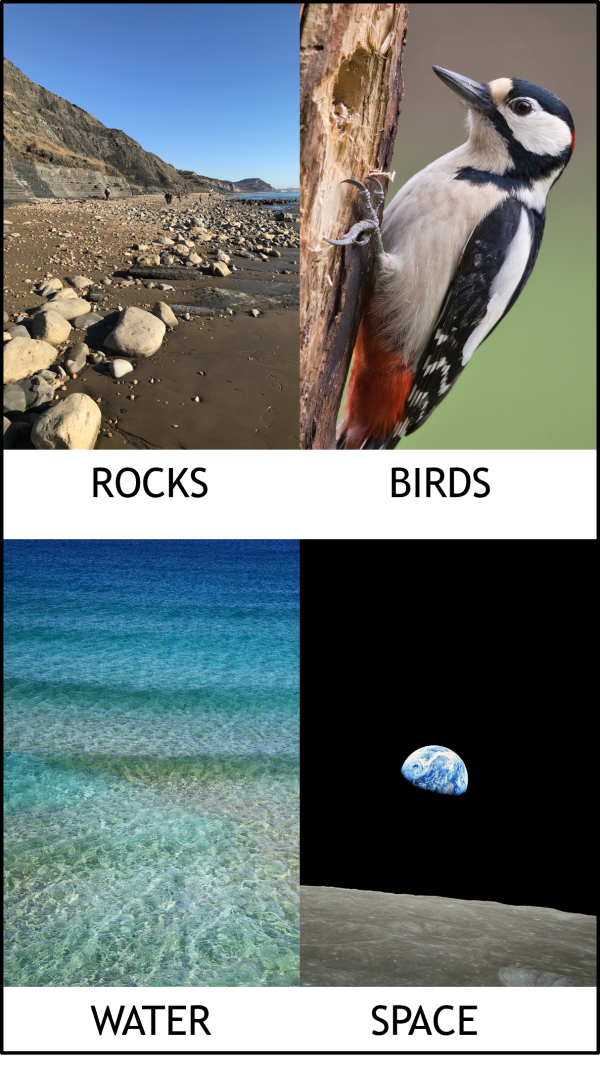
Rocks, Birds, Water and Space? Not a trivia question but a rather innovative new online course for Machine Learning in the Natural Sciences from Portland State University Department of Geology. After being taught the basics of machine learning you can choose your topic of interest and dataset (rocks, birds, water or space) then follow a... Continue Reading →
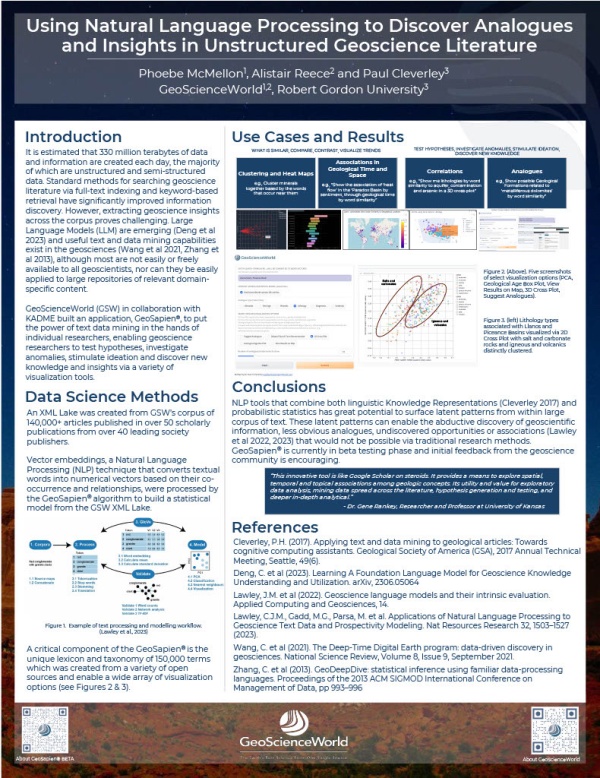
Transitioning Geoscience (Literature) into the Age of AI
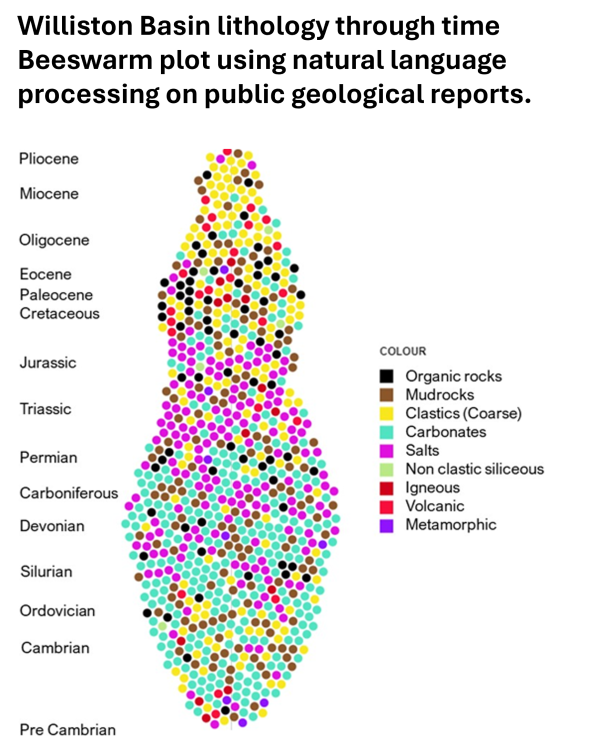
I co-authored a paper presented at the Geological Society of London late last year on the topic of transitioning geoscience (literature) into the age of AI. The aim is to inject more creativity into the way we explore big data geoscience documentation and release free, easy to use web apps using techniques enabled by AI. The... Continue Reading →
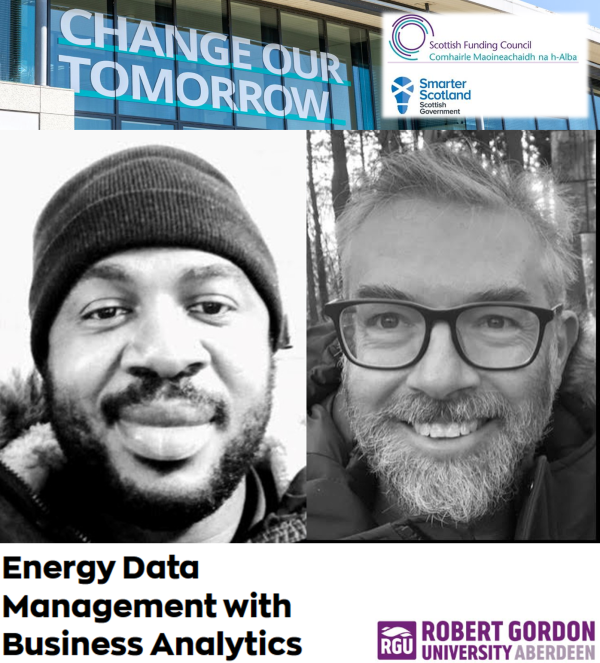
Energy Data Management with Business Analytics Lecture
Enjoyed giving the guest lecture today with Pascal Ezenkwu and students on the Energy Data Management with Business Analytics course at Robert Gordon University in Aberdeen. We covered Natural Language Processing, Large Language Models in Geoscience and the Subsurface, and the changing role of the data manager. Lots of wonderful questions about skills (both soft... Continue Reading →
Unethical Chatbots
The Global Forum on the ethics of AI took place recently in Kranj. Reading through the literature I was interested in the UNESCO recommendation on core values, particularly one on transparency: "The ethical deployment of AI systems depends on their transparency & explainability (T&E)." This relates to my "3 Laws" article last year. https://paulhcleverley.com/2023/10/26/the-three-laws-of-data-management/ I... Continue Reading →
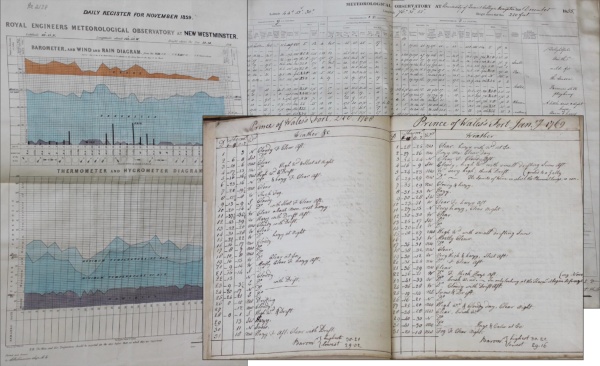
Old Records for New Knowledge
Some excellent open access papers published this week in the Geoscience Data Journal special issue. The preface states, "Studying a changing world requires observations going back in time to extend and contextualize our latest scientific knowledge. Old legacy data exist in non-digital formats. Thus, techniques and methodologies for the preservation, dissemination, interpretation, homogenization, calibration, and... Continue Reading →